
Bible Charts
The family of local congregation of Donnie Barnes is committed to keeping his Bible charts online here even though he passed away in 2013. The topics covered in Barnes’ collection include: the Bible (including the Old and New testaments), Bible places, the Godhead (Father, Son and Holy Spirit, the church, the cross of Christ, the Christian home, spiritual growth and more.
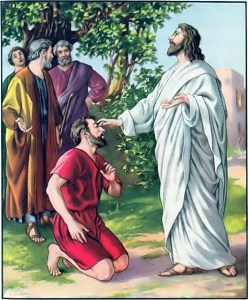
Jesus touching the eyes of a blind man
This website, compiled by Richie and Lonette White, addresses an array of topics in scripture-by-scripture tables. The broad categories range from authority and baptism to false teachings and salvation, with narrower topics incorporated into each category. Within the baptism category, for instance, students can see examples of water baptism in the Bible, learn about the baptism of the Holy Spirit and more.
Biblical Profiles
This table of 57 characters grades them as “good” or “bad” based on the stories about them. The profiles cover well-known judges, kings, prophets and major characters in the Bible narrative, as well as a few more obscure characters. The content in the Kids Zone Directory includes “The Story of Jesus” in short blurbs of time.
The Big Picture of the Bible
The Bible was written to be understood not by scholars and theologians but by the average seeker of truth. This presentation is designed to help readers step back from the pages and see the overall message of God. It puts the teachings in context so it is easier to understand how all of the elements of the story intertwine. Get a similar perspective in a three-part video series of sermons by Ken Craig.
Church History, PowerPoint Charts
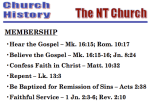 Andy Alexander produced this nine-part series of PowerPoint presentations about church history. The series covers the founding of the New Testament church, the prediction of and descent into apostasy, the rise of denominations during the Protestant Reformation, the Restoration Movement and apostasies that followed the Restoration.
Prophecies of Jesus Fulfilled
The Bible is one big story about God’s plan to save mankind by sending His Son to live as a man and offer Himself as the only acceptable sacrifice for sins. That plot line stretches across thousands of years and is revealed through numerous prophets. This table helps pull the story together by drawing a line between Old Testament prophecies of Jesus and New Testament fulfillment of those prophecies.
Disclaimer: A listing on this website is not an endorsement of the content as containing truth. Readers should always compare the words of men to the scriptures.

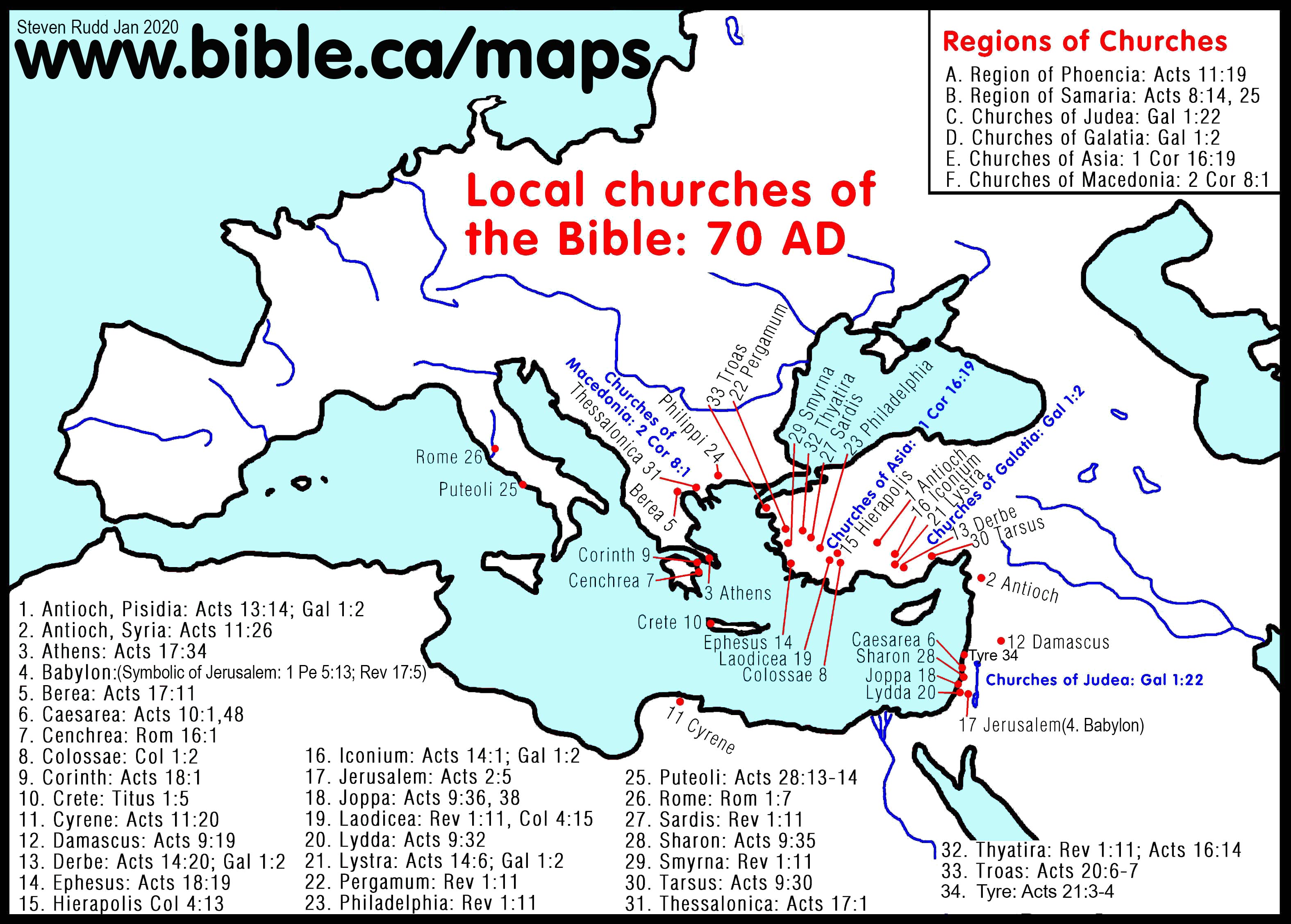
 The New Testament church exists in two senses: 1) the overall body of Christ that includes all saints around the world, from all time; and 2) the individual assemblies of Christians who worship and work together for periods of time in specific locations. In both forms, the people are the church.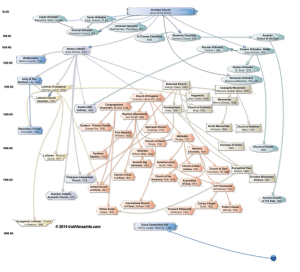

 Bible Study Page
Commentaries
Commentaries include the uninspired reflections of men who often read the Bible through their own preconceived filters based on their religious backgrounds. This list includes commentaries by denominational founders and religious scholars who may lack a complete understanding of the gospel truth. Consider their views carefully in the context of the actual Word of God. For more detailed insights into the value of commentaries, download Chris Reeves’ PowerPoint presentation “Commentaries: Their Use and Abuse.”
Complete Bible
Commentary Critical and Explanatory on the Whole Bible
Robert Jamieson, A. R. Fausset and David Brown published their commentary in 1871. It is commonly known as the Jameison-Faussett-Brown Commentary. StudyLight describes it as “a detailed, yet not overly technical, commentary of the Bible that holds to the historic teachings of orthodox Christianity.”
A British Methodist theologian, Adam Clarke took 40 years to complete his commentary on the Bible. He wrote nearly 1,000 pages in the original eight volumes, which reinforced the teachings of Methodist founder John Wesley. Clarke’s commentary played a central role in Methodist theology for two centuries.
Explanatory Notes upon the Old and New Testaments
John Wesley, who along with his brother Charles founded the Methodist movement, turned to writing about the Bible when he was too sick to travel and preach about it. Wesley tackled the New Testament first, publishing his Calvinistic interpretation of it in 1755 and supplementing that commentary with his notes on the Old Testament in 1765.
Most Bible scholars know this six-volume collection by its informal title, Matthew Henry’s Complete Commentary. Henry started writing it in 1708 and only made it to Acts by the time he died in 1714. Scholars who shared his Presbyterian worldview finished the work. The abridged version, Matthew Henry’s Concise Commentary, is contained within one volume.
English Baptist John Gill, an adherent of Calvinism, penned separate commentaries on the testaments between 1746 and 1763. He started with three volumes of discussion about the New Testament and later added six more volumes on the Old Testament.
Continue reading →