
The Internet has made it easy for everyone from elders and evangelists to everyday saints, both men and women, to publish their thoughts about the Bible and religious topics. We will update this index of brotherhood writers as we discover new websites, so please send your suggestions to aircongress@gmail.com.
Alphabetical by last name
 — Jeff Asher (Bible Talk)
— David Baker
— Ed and Patsy Bragwell
— Kris Brewer (In Season and Out)
— Michael and Jeannie Cole
— Mark Copeland (Executable Outlines)
— Rhodes Davis (Godly Youth)
— Patrick Donahue (Doctrine Matters)
— Tim Haile (The Bible Banner)
— Jason Hardin (In God’s Image)
— Gary Henry (WordPoints)
— Gary Hunt (Bible Search)
— Ferrell Jenkins (Bible World)
— Phillip Martin (Gospel Defender)
— Wes McAdams (Radically Christian)
— Allan McNabb (Bible Study Guide)
— Doy Moyer (Mind Your Faith)
— Alex, Arthur and Max Ogden (Ogden’s Bible Resources)
— David Padfield
— David Pratte (The Gospel Way)
— Joe Price (Sword Tips)
— The Good Teacher (Chris Reeves)
— David J. Riggs
— Alan Ritchie
— Steve Rudd (The Interactive Bible)
— Bill Sexton
— Jeff Smelser (New Testament Greek)
— Keith Stonehart
— Richard and Malinda Thetford
— Allan Turner (re:thinking)
— Dene Ward (Flight Paths)
— Ken Weliever (The Preacher’s Word)
— Bob Williams
— Joel Williams (Bible Mirror)
— Steve Wolfgang (Eclectic)
Disclaimer: A listing on this website is not an endorsement of any specific content as containing truth. Readers should always compare the words of men to the scriptures.

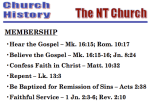

 The New Testament church exists in two senses: 1) the overall body of Christ that includes all saints around the world, from all time; and 2) the individual assemblies of Christians who worship and work together for periods of time in specific locations. In both forms, the people are the church.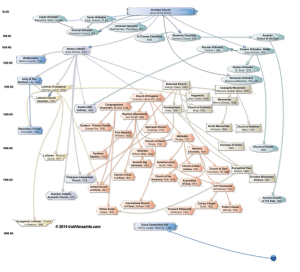


Commentaries
Commentaries include the uninspired reflections of men who often read the Bible through their own preconceived filters based on their religious backgrounds. This list includes commentaries by denominational founders and religious scholars who may lack a complete understanding of the gospel truth. Consider their views carefully in the context of the actual Word of God. For more detailed insights into the value of commentaries, download Chris Reeves’ PowerPoint presentation “Commentaries: Their Use and Abuse.”
Complete Bible
Commentary Critical and Explanatory on the Whole Bible
Robert Jamieson, A. R. Fausset and David Brown published their commentary in 1871. It is commonly known as the Jameison-Faussett-Brown Commentary. StudyLight describes it as “a detailed, yet not overly technical, commentary of the Bible that holds to the historic teachings of orthodox Christianity.”
A British Methodist theologian, Adam Clarke took 40 years to complete his commentary on the Bible. He wrote nearly 1,000 pages in the original eight volumes, which reinforced the teachings of Methodist founder John Wesley. Clarke’s commentary played a central role in Methodist theology for two centuries.
Explanatory Notes upon the Old and New Testaments
John Wesley, who along with his brother Charles founded the Methodist movement, turned to writing about the Bible when he was too sick to travel and preach about it. Wesley tackled the New Testament first, publishing his Calvinistic interpretation of it in 1755 and supplementing that commentary with his notes on the Old Testament in 1765.
Most Bible scholars know this six-volume collection by its informal title, Matthew Henry’s Complete Commentary. Henry started writing it in 1708 and only made it to Acts by the time he died in 1714. Scholars who shared his Presbyterian worldview finished the work. The abridged version, Matthew Henry’s Concise Commentary, is contained within one volume.
English Baptist John Gill, an adherent of Calvinism, penned separate commentaries on the testaments between 1746 and 1763. He started with three volumes of discussion about the New Testament and later added six more volumes on the Old Testament.
Continue reading →